
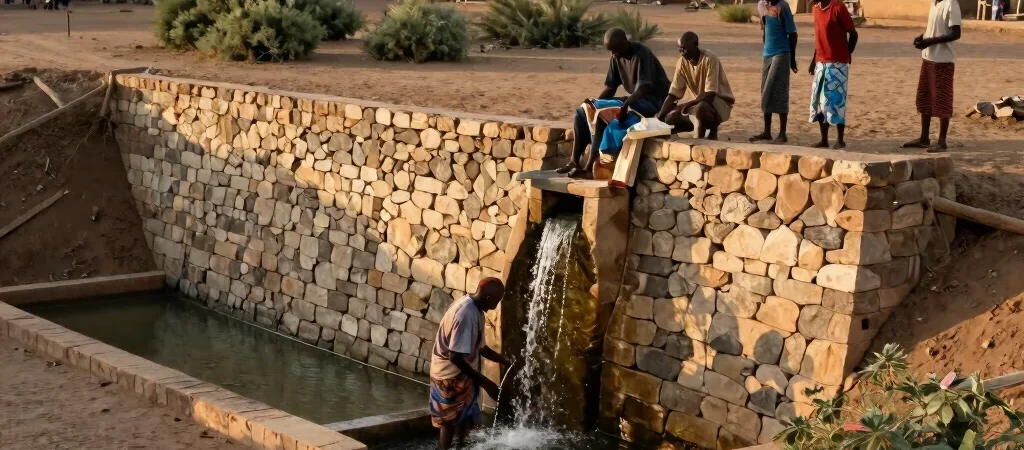
Travel through almost any semi-arid district in Matabeleland or southern Mozambique and you will encounter dry, rusted hand pumps bearing agency logos from forgotten development rounds. These mechanical ruins are not casualties of technical ignorance or inevitable climate adversity; they are monument markers of development initiated without collective stewardship. Where water infrastructure is dropped into a village as a technical gift, the social contracts needed to maintain it simply do not exist.
The Fragility of Turnkey Engineering
External engineering contractors are contracted to drill, fit, photograph, and exit, satisfying linear procurement milestones. But water security is fundamentally social, involving contested rights, seasonal grazing migration, and intricate local dispute mechanisms. When a system breaks and no municipal spares exist within eighty miles, communities that were never trusted with the design phase rarely organise the capital to repair it.
Strengthening Indigenous Resource Stewardship
By contrast, water points governed through established community commons routinely thrive for decades across unpredictable drought cycles. In these villages, water committees set maintenance contributions, balance livestock watering with household gardening, and enforce conservation measures rooted in shared ecological memory. External partners can contribute technical surveying and material procurement, but the governance rules must remain firmly in community custody.
Investing in Long-Term Local Capacity
Sustaining essential communal assets requires development practitioners to reallocate budgets away from rapid rollout toward patient institutional strengthening. Equipping local artisans, documenting customary allocation norms, and creating municipal links that respect community sovereignty ensure that investments survive after external funding cycles expire. Enduring poverty alleviation rests on people owning the tools of their survival.